Black streaks can make an otherwise tidy Sarasota home look weathered. Before assuming the roof needs replacing—or reaching for a pressure washer—it helps to understand what the discoloration may be and how cleaning differs from roof repair.
Professional roof soft washing focuses on cleaning with an approach suited to the roof material, rather than trying to blast away stains. For homeowners considering roof cleaning in Sarasota, the important questions are simple: What is on the roof? What kind of roof is it? And is its condition suitable for cleaning?
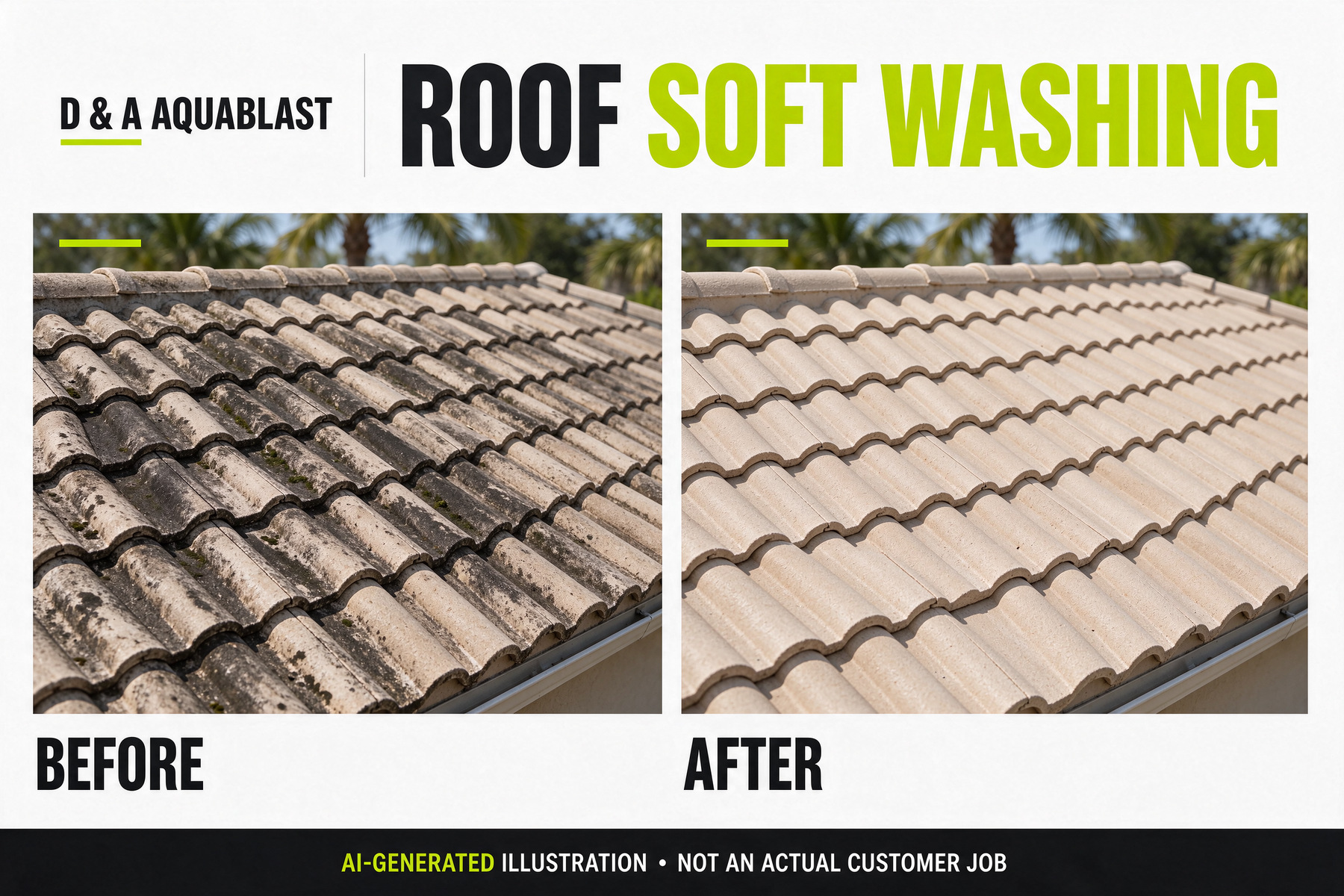
What causes black streaks on a roof?
On asphalt shingles, algae discoloration can appear brown or black, sometimes forming streaks. The Asphalt Roofing Manufacturers Association (ARMA) notes that this discoloration is widespread in the Gulf States and other warm, humid areas. That makes algae a relevant possibility for Sarasota homeowners, although a dark mark alone is not a reliable diagnosis. 1
Shade, moisture, and the surrounding environment can influence where discoloration appears. Roofs may also collect other surface buildup, so the cleaning recommendation should follow an assessment rather than a one-size-fits-all assumption.
A cleaner appearance does not prove that a roof is structurally sound. If you notice an interior water stain, a leak, cracked tiles, or damaged shingles, arrange a roofing assessment. Cleaning does not repair those problems and should not be presented as a substitute for necessary repairs.
What is professional roof soft washing?
Soft washing generally means using a suitable cleaning treatment and controlled, low-pressure application instead of relying on aggressive water pressure. The treatment, application method, and any rinsing must be appropriate for the roof covering and its manufacturer's guidance.
“Low pressure” is not the whole safety story. Product compatibility, roof condition, safe access, nearby landscaping, and runoff management also matter. A professional approach starts with deciding whether the roof can be cleaned appropriately—not simply choosing equipment.
Before scheduling, ask which treatment is appropriate for your roof and how the contractor will protect the surrounding property. The estimate is the right time to discuss products, access, and any material-specific restrictions.
Why roof material changes the cleaning method
Asphalt shingles
Asphalt shingles should not be treated like concrete pavement. ARMA warns against power washing, brushing, or scrubbing asphalt shingles and directs homeowners toward manufacturer-specific guidance. It also recommends trained professionals because a roof can become slippery during cleaning. 1
Ask how the proposed method follows the shingle manufacturer's instructions. Avoid treating a stronger spray or harder scrubbing as a shortcut to a better result.
Concrete and clay tile
Tile roofs need their own assessment. Tile type, surface finish, existing cracks, and access considerations can change the plan. A method suitable for one tile product may not be suitable for another, and walking on a roof can introduce additional risks.
Ask the contractor to explain the tile manufacturer's requirements and how fragile or damaged areas will be handled. ARMA's asphalt-shingle bulletin is not a blanket endorsement of soft washing for concrete or clay tile roofs.
Metal and other roof coverings
Metal roofing and specialty roof coverings also require material-specific decisions. Coatings, finishes, fasteners, and manufacturer restrictions should be considered before a treatment is selected. If the material or its instructions are uncertain, clarify them first rather than proceeding with an assumed universal roof-cleaning method.
What a typical professional cleaning visit involves
A homeowner can reasonably ask about these stages before authorizing work:
- Assessment and scope. Identify the roof material, visible buildup, accessible areas, and condition concerns. Discuss what cleaning can address and whether roofing repairs should come first.
- Property preparation. Explain plans for nearby plants, outdoor belongings, access, and managing cleaning solution or rinse water around the property.
- Material-appropriate treatment. Choose a method consistent with the roof manufacturer's guidance, using controlled application rather than aggressive pressure.
- Treatment time and any appropriate rinsing. Allow the selected treatment to work and follow the applicable directions. Rinsing needs can differ by material and method; there is no universal sequence for every roof.
- Review and aftercare. Discuss the observed result, any remaining concerns, and realistic maintenance expectations. Document roof issues that need attention from a qualified roofing professional.
These questions help you compare proposals without needing to handle chemicals or climb onto the roof yourself. This guide does not provide a DIY chemical recipe or recommend homeowner roof access.
What results should you expect?
Cleaning may improve the appearance of surface discoloration, but results vary with the material, condition, and type of buildup. It cannot restore damaged roof components or guarantee that every mark will disappear.
Algae discoloration can recur after cleaning, as ARMA notes. A fixed “never again” promise would not be a sensible expectation. Ask about maintenance based on your roof and surroundings rather than assuming every home needs the same schedule.
Roof cleaning also does not guarantee a longer roof lifespan or insurance compliance. If you have an insurer's notice or a warranty question, obtain the specific requirements from the insurer or manufacturer before deciding on work.
Planning roof cleaning in Sarasota and nearby communities
D & A Aquablast, LLC offers residential roof soft washing in Sarasota and serves homeowners in Bradenton, Lakewood Ranch, Siesta Key, FL, and Longboat Key, FL. The right starting point is your roof's material and condition, not a generic cleaning package.
You can review our roof soft-washing service and Sarasota service area, then contact D & A Aquablast, LLC to discuss your property.
For a professional, free estimate, call or text Damian at (941) 260-1638. Share your location, roof material if known, and any visible damage or leak concerns so the conversation begins with the right questions.
References
Read ARMA’s algae-discoloration guidance, June 6, 2024.